Should I Renovate My House Before Selling It?
Some renovations pay for themselves before a sale; others cost more than they return. Here's how to decide which projects to do, which to skip, and when selling as-is is the better deal.
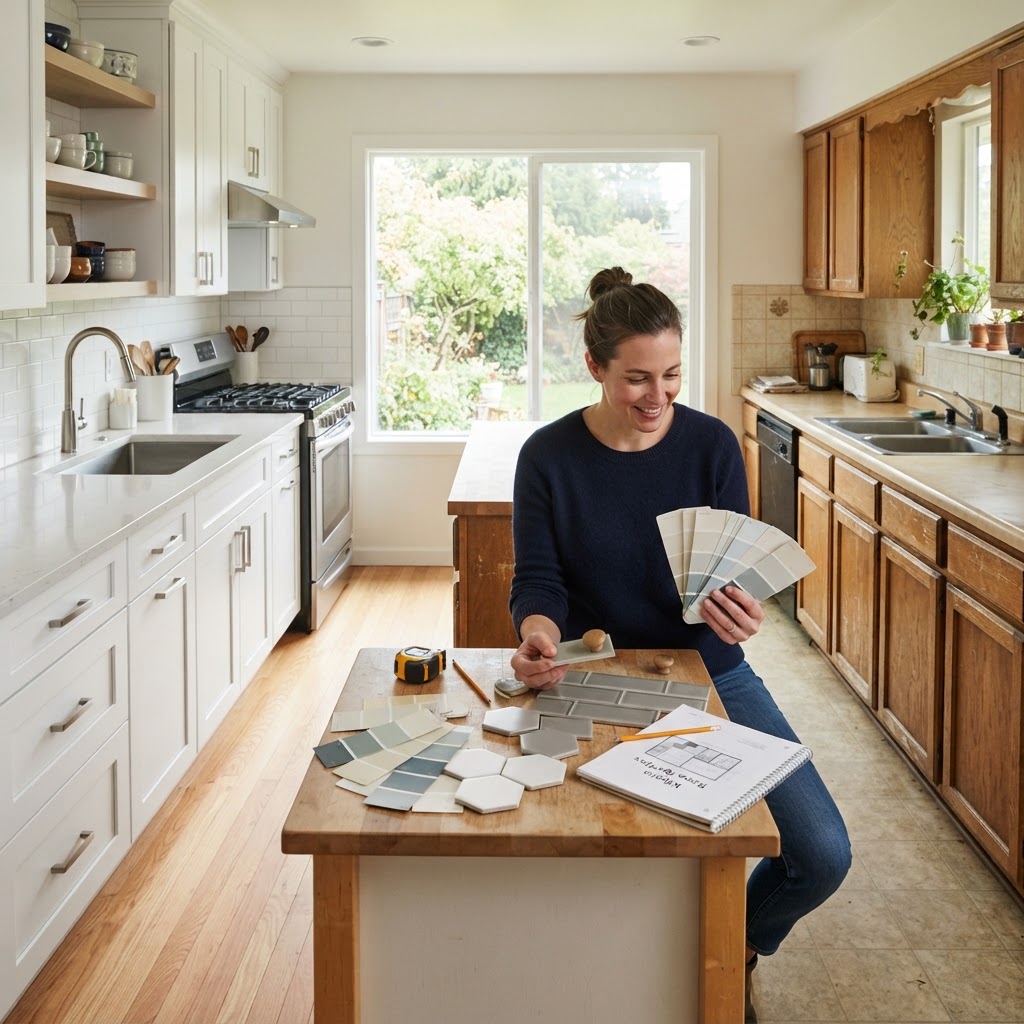
Should I Renovate My House Before Selling It?
It's one of the most common questions homeowners ask before listing: "Should I fix this up, or sell it as-is?" The answer isn't the same for everyone — it depends on your home's condition, your local market, your budget, and your timeline.
The short version: some renovations pay for themselves and then some; others cost more than they return. The trick is knowing which is which before you start spending.
This guide breaks down how to think about pre-sale renovations, which projects are worth it, which to skip, and how to decide if you're better off selling as-is.
Start With the Honest Question: Why Are You Renovating?
Before you pick up a hammer, ask yourself what you're actually trying to achieve:
- "I want the highest possible sale price." This points toward strategic, high-ROI projects — kitchen and bathroom updates, fresh paint, flooring.
- "I want the fastest possible sale." This points toward broad-appeal fixes — paint, lighting, decluttering, curb appeal.
- "I want to avoid buyer negotiations and lowball offers." This points toward fixing the obvious defects buyers will use to negotiate — leaky roof, old furnace, broken windows.
- "I want to sell without lifting a finger." This points toward selling as-is to a cash buyer or an investor.
Your answer determines which renovations (if any) make sense. A renovation that maximizes sale price may not be worth it if you're on a tight timeline, and vice versa.
The Renovations That Usually Pay Off
Not all renovations are equal. Here are the projects that consistently deliver the best return when selling a home in the Greater Toronto Area.
1. Fresh paint (interior)
- Cost: $2,000–$5,000 for a typical home
- Return: Often 100%+ in faster sale and higher offers
- Why: A fresh coat of neutral paint (soft whites, warm grays, greige) instantly modernizes a home and makes it feel cleaner and larger. It's the single highest-ROI pre-sale project.
2. Kitchen refresh (not full reno)
- Cost: $5,000–$15,000 for a refresh vs. $30,000–$60,000+ for a full gut
- Return: A refresh often returns 80–120%; a full gut rarely returns more than 60–80%
- What to do: Paint or refinish cabinets, replace hardware, install a new backsplash, upgrade countertops (quartz or granite), swap in modern lighting, and replace old appliances with matching stainless or panel-ready units.
- Why: Kitchens sell homes. But buyers in most price brackets don't expect a brand-new custom kitchen — they expect a clean, functional, updated-looking one.
3. Bathroom updates
- Cost: $3,000–$10,000 per bathroom
- Return: 70–100%+ depending on scope
- What to do: Replace the vanity, upgrade the toilet, install a modern faucet and showerhead, regrout tile, and paint. A full gut is rarely worth it pre-sale unless the bathroom is genuinely unusable.
4. Flooring
- Cost: $3,000–$12,000 for a typical home
- Return: 70–100%+
- Why: Worn carpet, cracked tile, or mismatched flooring signals "work needed" to every buyer. Broadloom or dated vinyl should go. Hardwood, quality laminate, or LVP in living areas, and fresh tile in kitchens and bathrooms, are the standard buyers expect.
5. Curb appeal and exterior
- Cost: $500–$5,000
- Return: 100%+ in faster sale and better first impressions
- What to do: Power-wash the exterior and walkway, fresh mulch, trimmed hedges, a new front door or door paint, new house numbers, and a clean entryway. First impressions are online first — your exterior photo is often the main listing image.
6. Lighting
- Cost: $500–$2,500
- Return: High relative to cost
- Why: Swap out dated brass or builder-grade fixtures for modern, neutral options. Add LED bulbs throughout. Bright, well-lit rooms feel larger and more inviting.
The Renovations That Usually Don't Pay Off
These projects are expensive and rarely return their cost at sale time. Do them only if you're staying in the home for years to enjoy them — not as a pre-sale investment.
1. Full kitchen gut renovation
- Cost: $30,000–$60,000+
- Typical return: 50–70%
- Why: Buyers have their own taste. A $50,000 custom kitchen doesn't add $50,000 to the sale price — it helps the home sell, but you'll typically recover half to two-thirds of the cost.
2. High-end bathroom spa remodel
- Cost: $20,000–$40,000+
- Typical return: 50–65%
- Why: A soaker tub, heated floors, and custom tile are personal preferences. Most buyers won't pay a premium for them.
3. Room additions and structural changes
- Cost: $50,000–$150,000+
- Typical return: 40–60%
- Why: Adding a bedroom or bumping out a kitchen is expensive, slow, and permits can delay your sale. The market rarely rewards the full cost.
4. Finished basement (full)
- Cost: $15,000–$40,000+
- Typical return: 50–70%
- Why: A clean, dry, painted basement with good lighting is worth doing. A full finished basement with a bathroom and wet bar is a personal-use investment, not a pre-sale one.
5. Pool installation
- Cost: $30,000–$80,000+
- Typical return: 20–50%
- Why: In the GTA, pools are seasonal and a maintenance burden. Many buyers see them as a negative, not a feature.
The Repairs You Should Almost Always Make
Separate from renovations, there are functional repairs that buyers (and home inspectors) will flag. Skipping these invites price reductions and collapsed deals.
- Roof leaks or end-of-life roof — replace or repair; buyers will negotiate hard on this.
- Furnace and AC — if at end of life, replace; a dead furnace in November kills deals.
- Electrical and plumbing issues — fix anything unsafe or non-functional.
- Water damage and mold — address the source and remediate; this is a deal-killer if discovered during inspection.
- Broken windows and doors — replace or repair; they're visible and signal neglect.
- Permits and code issues — resolve any open permits or obvious code violations before listing.
These aren't "renovations" — they're risk management. A buyer's inspector will find them, and the buyer will either ask you to fix them, reduce the price, or walk away.
How to Decide: A Simple Framework
Use this flow to decide whether to renovate before selling.
Step 1: Get a pre-listing inspection
For $400–$600, a home inspector will tell you exactly what buyers will find. This is the best money you'll spend — it turns guesswork into a list.
Step 2: Fix the must-dos
Address anything from the "repairs you should almost always make" list above. These are non-negotiable for a clean sale.
Step 3: Walk through with a real estate agent or stager
Ask: "What would make this home show better to a buyer?" Their answer is your renovation list. It's often shorter than you think — paint, lighting, flooring, decluttering, and curb appeal.
Step 4: Price the projects and compare to the expected return
For each project, get a quote and estimate the likely return. If a $15,000 kitchen refresh will help your home sell for $20,000 more and 2 weeks faster, do it. If a $40,000 bathroom remodel will return $25,000, skip it.
Step 5: Consider your timeline
Renovations take time. Paint and flooring: 1–2 weeks. Kitchen refresh: 2–4 weeks. Bathroom updates: 2–3 weeks. Full gut: 6–10 weeks. If you need to sell in 30 days, your renovation list shrinks dramatically.
The Cost vs. Value Math
Here's a rough breakdown for a typical GTA home being prepped for sale.
| Project | Typical Cost | Typical Return | Worth It Pre-Sale? |
|---|---|---|---|
| Interior paint | $2,000–$5,000 | 100%+ | Yes |
| Kitchen refresh | $5,000–$15,000 | 80–120% | Usually yes |
| Bathroom update | $3,000–$10,000 | 70–100%+ | Usually yes |
| Flooring | $3,000–$12,000 | 70–100%+ | Usually yes |
| Curb appeal | $500–$5,000 | 100%+ | Yes |
| Lighting | $500–$2,500 | High | Yes |
| Full kitchen gut | $30,000–$60,000+ | 50–70% | Rarely |
| Spa bathroom | $20,000–$40,000+ | 50–65% | Rarely |
| Room addition | $50,000–$150,000+ | 40–60% | No |
| Full basement finish | $15,000–$40,000+ | 50–70% | Only if staying |
| Pool | $30,000–$80,000+ | 20–50% | No |
When You Should Skip Renovations and Sell As-Is
Renovating before selling isn't always the right call. You should seriously consider selling as-is if:
- The home needs major work — roof, foundation, knob-and-tube wiring, galvanized plumbing, asbestos, mold. The cost and complexity of fixing these before sale often exceeds the return.
- You're on a tight timeline — relocation, divorce, probate, financial pressure. Renovations take weeks you may not have.
- You're in a hot seller's market — buyers may compete for your home even in dated condition, reducing the incentive to renovate.
- You don't have the cash to fund renovations — financing reno work pre-sale is risky; you may not recover it before closing.
- The home is an investment or rental property — tenant-occupied homes are hard to renovate, and investor buyers expect to do their own work.
- You're selling to an investor or cash buyer — they'll price the home based on its as-is value and do the renovations themselves.
The As-Is Option: A Cash Offer
If you decide renovating before selling isn't worth the time, cost, or risk, there's a clean alternative: sell your home as-is to a cash buyer like Skyway.
What that means in practice
- No renovations, no repairs, no staging. We buy the home in its current condition.
- No showings. One walkthrough on your schedule — not dozens of strangers touring your home.
- No commission. The offer is the number you get; there's no 5% listing commission to subtract.
- No financing risk. It's a cash offer, so the deal won't fall through because of a buyer's mortgage.
- You choose the closing date. As fast as 14 days, or aligned with your next move.
When the math works
On a home that needs $30,000–$50,000 in updates to reach top market value, selling as-is to a cash buyer can be the better financial outcome — you skip the renovation cost, the carrying costs during the work, the commission, and the risk of a deal collapsing mid-renovation.
The Bottom Line
Should you renovate before selling? Yes for high-ROI projects — paint, kitchen refresh, bathroom updates, flooring, lighting, and curb appeal. No for major renovations — full guts, additions, spas, pools — which rarely return their cost.
Always fix the functional must-dos (roof, furnace, leaks, electrical) — buyers will find them, and negotiating over them costs more than fixing them.
And if the renovation list is long, the budget is tight, or the timeline is short, selling as-is to a cash buyer is a legitimate option — not a compromise. For many homeowners, skipping the renovation cycle entirely and taking a fair, no-commission cash offer is the better deal.
Curious what your home is worth as-is? Get a free, no-obligation cash offer from Skyway and see exactly what you'd walk away with — no renovations, no commission, no surprises.