Scammed by a Contractor: What to Do and How to Recover
If you've been scammed by a contractor, you're not out of options. Here's exactly what to do to recover your money, the red flags to watch for next time, and what to do with a half-finished home you just want out of.
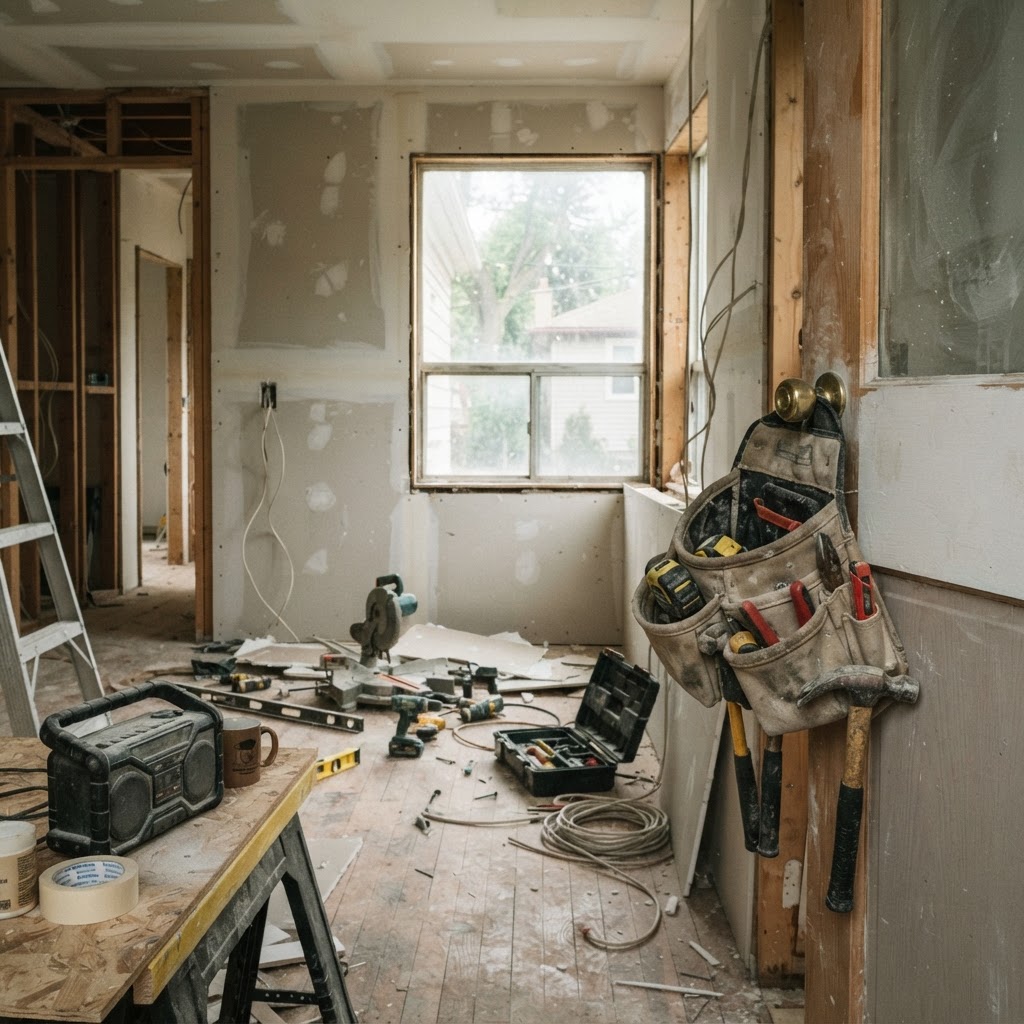
Scammed by a Contractor: What to Do, How to Recover, and How to Avoid It Next Time
Few things are as stressful as watching a renovation go sideways — missed deadlines, excuse after excuse, and then one day the contractor stops returning your calls and your deposit is gone. If you've been scammed by a contractor, you're not alone, and you're not out of options.
This guide walks through what to do the moment you realize you've been defrauded, how to try to recover your money, how to spot the red flags next time, and — if the home itself has become the problem — how to move on without sinking more money into a project that may never finish.
First: Are You Actually Scammed, or Just Frustrated?
Not every bad renovation is a scam. Before you take action, figure out which of these you're dealing with:
- A legitimate contractor who's in over their head. They're slow, disorganized, or underfunded — but they're still trying. They respond to you, even if badly.
- A negligent contractor. They've abandoned the job or done shoddy work, but they're a real business you can track down and hold accountable.
- A scammer. They took your deposit (or progress payments) with no intention of completing the work, used fake credentials, and have vanished or are actively evading you.
The steps below apply to all three, but the urgency — and your realistic chance of recovery — is highest with #3. The sooner you act, the more options you have.
Step 1: Stop Paying Immediately
The moment you suspect fraud, stop all payments — no more deposits, no more progress payments, no more "just one more cheque and I'll finish" payments. Scammers rely on the sunk-cost fallacy: the more you've paid, the more you'll keep paying in the hope they'll come through.
- Cancel any pending cheques or e-Transfers.
- If you paid by credit card, contact your card issuer and request a chargeback for services not rendered.
- If you financed the renovation through a lender, notify them — they may have fraud protections or a process to halt disbursement.
Step 2: Document Everything
You'll need evidence for every step that follows — a consumer complaint, a lawsuit, an insurance claim, or a police report. Start a file (physical or digital) and collect:
- The contract — signed agreement, scope of work, payment schedule, timelines.
- All communications — texts, emails, voicemails, call logs. Screenshot everything before it disappears.
- Payment records — bank statements, e-Transfer receipts, credit card statements, cancelled cheques. Note the date, amount, and what each payment was for.
- Photos and videos of the work site** — before, during, and after. Show what was promised vs. what was done.
- The contractor's identity — business name, owner's name, phone, email, address, HST number, business license number, and any WSIB clearance certificate they provided.
- Permits and inspections — check with your municipality for any permits they claimed to pull and whether inspections were done.
Organize it chronologically. This file is your case.
Step 3: Send a Formal Demand Letter
Before you escalate to authorities or court, send a written demand letter. This creates a paper trail and sometimes shakes loose a response.
What to include
- A clear statement that the contractor has breached the contract.
- The specific amounts paid and the work not completed.
- A deadline for response (typically 10–14 days).
- A clear demand: complete the work, refund the money, or provide a written plan with dates.
- A statement that you will escalate to consumer protection authorities, civil court, and/or police if they don't respond.
Send it by registered mail with signature required and keep the receipt. If they refuse delivery, that's still evidence you tried.
Step 4: File Complaints With the Right Authorities
In Ontario, several bodies can act on contractor fraud. File with all that apply — they're free and create an official record.
1. Consumer Protection Ontario
File a complaint with the Ministry of Public and Business Service Delivery. They investigate unfair business practices and can prosecute under the Consumer Protection Act. This is the primary provincial channel.
2. The Better Business Bureau (BBB)
File a complaint at bbb.org. Even if the contractor isn't accredited, the complaint becomes public and warns other homeowners. Some businesses respond to protect their rating.
3. your local municipal building department
If the contractor did work without permits or failed inspections, report it. The municipality can order the work corrected and flag the contractor.
4. The police — if theft or fraud is clear
If the contractor took a large deposit and vanished with no work done, this is theft by deception or fraud. File a report with your local police service. Have your documentation file ready. Police often treat these as civil matters, so be specific about the fraud — misrepresentation, fake credentials, multiple victims.
5. Tarion (for new home builds only)
If this was a new home construction or a major renovation covered under a Tarion warranty, file a claim with Tarion. Note that most standard renovations are not Tarion-covered.
Step 5: Consider Small Claims Court
If the amount at stake is under $35,000, Ontario's Small Claims Court is your fastest, lowest-cost legal route. You can file without a lawyer.
What you'll need
- Your documentation file (Step 2)
- The demand letter and proof of delivery (Step 3)
- A clear calculation of damages — money paid minus value of work actually done, plus any costs to fix the damage or complete the work
- Names and addresses of the contractor and any witnesses
The process
- File a Plaintiff's Claim (smallclaims.gov.on.ca or at a court office). Filing fee is under $200.
- Serve the contractor. They have 20 days to file a Defence.
- If they don't defend, you can get a default judgment.
- If they do, you'll have a settlement conference and possibly a trial.
- If you win, you'll need to enforce the judgment — garnish their bank account, file a writ against property, or hire a collections agency.
For amounts over $35,000, you'll need to file in Superior Court — hire a lawyer. Many offer a free initial consultation.
Step 6: Check Your Insurance and Financing
Home insurance
Most standard home insurance policies don't cover contractor fraud — but some cover resulting property damage (e.g., a burst pipe from a botched plumbing job). Read your policy and call your insurer. If the contractor caused damage, you may have a claim.
Credit card chargeback
If you paid by credit card and the work wasn't done, file a chargeback for "services not rendered." You typically have 120 days to dispute. Be specific and include your documentation.
Renovation financing
If you financed through a third-party lender (e.g., a home equity line of credit or a renovation loan), notify them. Some lenders have fraud provisions or will pause payments while you resolve the dispute.
Step 7: Warn Others
Once your case is underway, post honest, factual reviews on Google, Facebook, Homestars, and the BBB. Stick to the facts — what was paid, what was done, what wasn't — and avoid emotional or defamatory language. A factual review protects other homeowners and may prompt the contractor to respond.
How to Spot a Contractor Scam Before It Happens
The best recovery is not getting scammed in the first place. Here are the red flags every homeowner should know.
1. They demand a large upfront deposit
In Ontario, it's illegal for a contractor to accept a deposit of more than 10% of the total contract value (or $1,000, whichever is less) without a specific reason and written agreement. A demand for 30%, 50%, or full payment upfront is a major red flag — and often illegal.
2. They pressure you to sign immediately
"This price is only good today" or "I have another client who wants this slot" is a pressure tactic. A reputable contractor gives you time to think, check references, and review the contract.
3. They have no physical address or verifiable business
A real contractor has a registered business, an HST number, a business address (not just a PO box), and a track record. Verify their business registration and WSIB clearance. Call the references they give you — and ask for addresses of past projects you can drive by.
4. They want cash payments or to be paid "off the books"
This strips away your paper trail and is often a sign they're not reporting income or are operating without proper licensing. Always pay by traceable methods — cheque, e-Transfer, or credit card.
5. They won't provide a written contract
A real contract includes scope of work, materials, timeline, payment schedule tied to milestones, warranty, and dispute resolution. "Trust me" is not a contract.
6. Their quote is suspiciously low
A bid that's 30–50% below others often means they're underbidding to win the job, then cutting corners or asking for more money mid-project. Get at least three quotes. If one is dramatically lower, ask why.
7. They ask you to pull the permits
A reputable contractor pulls their own permits. If they ask you to pull permits in your name, they may be unlicensed or trying to shift liability to you.
8. They can't show proof of insurance or WSIB
Ask for a current Certificate of Insurance and a WSIB clearance certificate. If they can't produce them, don't hire them.
The Deeper Problem: When the Home Itself Has Become the Burden
Sometimes a contractor scam is the last straw in a home that's been a source of stress for years. The half-finished renovation sits there. The bills pile up. The home you were fixing up to sell is now harder to sell than before you started.
If you're in that situation, you have options beyond fighting the contractor:
1. Hire a new contractor to finish the job
Get quotes to complete and repair the work. If you can afford it, this is the path back to a market-ready home — and the cost of the fix-up may be recoverable through your legal claim against the original contractor.
2. Sell the home as-is to a cash buyer
If you don't want to spend more money, more time, or more energy on a home that's already cost you, selling as-is to a cash buyer like Skyway is a clean exit. We buy homes in any condition — including half-finished renovations, damaged properties, and homes with open permits or inspection issues.
What that looks like
- No need to finish the renovation. We buy the home as it stands.
- No showings or staging. One walkthrough on your schedule.
- No commission. The offer is the number you get.
- No financing risk. It's a cash offer, so the deal won't fall through.
- You choose the closing date. As fast as 14 days, or on your timeline.
For homeowners who've been burned by a contractor and just want out, this can be the cleanest path — you stop sinking money into a broken project and walk away with cash in hand.
The Bottom Line
If you've been scammed by a contractor: stop paying, document everything, send a demand letter, file complaints with Consumer Protection Ontario and the BBB, report to police if fraud is clear, and take it to Small Claims Court if the amount is under $35,000. Act fast — the longer you wait, the harder recovery becomes.
And if the experience has left you with a half-finished home you no longer want to deal with, you don't have to finish it to move on. Get a free, no-obligation cash offer from Skyway and see what your home is worth as-is — no renovation, no commission, no more stress.